Benefits of Written Affection Messages for Couples

Benefits of Written Affection Messages for Couples
Written affection messages are deliberate, personal expressions of love and appreciation delivered in written form, and research confirms they are one of the most effective tools couples have for deepening emotional connection. Whether you call them love notes, love letters, or affection texts, the practice is nearly universal. Nearly 90% of people have written a love letter at some point, and many rank them above traditional gifts. The benefits of written affection messages extend well beyond sentiment. Dr. Kory Floyd’s research on affectionate communication and art therapist Alison McKleroy’s work on handwriting both confirm measurable effects on mental health, physical health, and relationship satisfaction.
1. What are the top relationship benefits of written affection messages?
Written affection messages make your partner feel genuinely seen and valued. That feeling is not trivial. Feeling loved matters more than being loving, which means your effort to write something heartfelt directly addresses your partner’s core emotional need.
The relational benefits stack up quickly:
- Stronger emotional bonds. Higher overall affection levels lead to stronger relationships, even when one partner expresses more than the other. You do not need perfect balance to see results.
- Greater trust and reciprocity. When you write affectionately, you model vulnerability. That openness invites your partner to respond in kind over time.
- Better conflict resilience. Couples with a strong affection baseline recover faster from disagreements. Written messages build that baseline steadily.
- Long-term emotional anchors. Written notes create lasting support that partners can revisit years later. A text or card does not disappear the way a spoken compliment does.
The importance of written affection also shows up in how couples communicate during hard times. Partners who regularly exchange loving messages report feeling more secure and less reactive during conflict.
Pro Tip: Keep a small collection of messages your partner has sent you. Rereading them during stressful periods restores your sense of connection faster than almost any other technique.
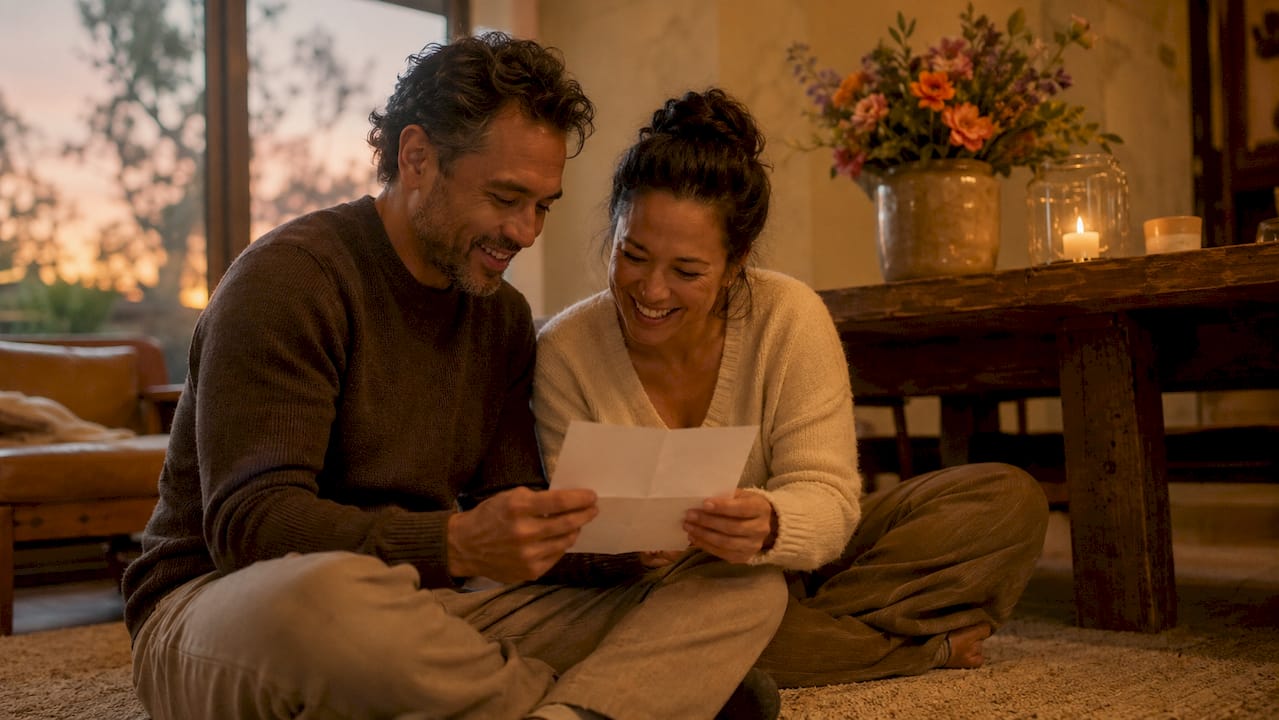
2. How written messages improve mental and physical health
The effects of loving messages go far beyond mood. Expressing positive feelings through words or actions produces measurable physiological changes, including lower cortisol levels, reduced blood pressure, and stronger immune function. These are not minor perks. They represent real, lasting changes to how your body handles stress.
The brain chemistry behind this is straightforward. Receiving an affectionate message triggers the release of oxytocin and dopamine. Oxytocin reduces anxiety and promotes bonding. Dopamine reinforces the behavior, making both partners want to repeat it.
The emotional benefits of affection texts also flow back to the sender. Sending positive messages lifts the mood of both the sender and the receiver quickly and measurably. That bidirectional effect is what researchers call positive emotional contagion. You write something kind, and you feel better for having written it.
“Affectionate communication is not just good for relationships. It is good for the body.” — Dr. Kory Floyd, communication researcher
Mental health gains are equally significant. Sending kind messages alleviates social anxiety and improves mood for both parties. For couples navigating stress, distance, or routine, this is a low-effort, high-return practice. The emotional connection built through consistent written affection compounds over time, much like interest in a savings account.
3. Why handwritten notes hit differently than digital messages
Handwritten notes carry a weight that typed messages simply cannot replicate. The reason is physical. Writing by hand requires slowing down, choosing words carefully, and committing to the page. That effort signals to your partner that you prioritized them.
Art therapist Alison McKleroy explains that handwriting induces a calming flow state and provides tactile input that benefits mental well-being. The act of writing is therapeutic for the writer before the note even reaches the recipient.
| Feature | Handwritten note | Digital message |
|---|---|---|
| Effort signal | High, visible | Low, assumed |
| Longevity | Physical, kept for years | Easily deleted or lost |
| Personal touch | Unique handwriting, personality | Uniform font, generic feel |
| Calming effect on writer | Flow state, nervous system calm | Minimal |
| Emotional weight on receipt | Strong, tangible | Moderate |
A handwritten card also carries your personality in ways a text cannot. Your handwriting, your choice of paper, a small drawing in the margin, a folded note tucked into a coat pocket. These details communicate care in a way no emoji can match.
Pro Tip: You do not need beautiful handwriting to make an impact. Messy, genuine, and specific beats polished and generic every time.
4. How to make your written messages actually land
Specificity is the single biggest factor in message impact. Specific, personal messages produce larger and longer-lasting emotional benefits than generic ones. “I love you” is true and good. “I love the way you laughed at dinner last Tuesday and then immediately tried to hide it” is unforgettable.
Here is a practical framework for writing messages that genuinely connect:
- Name a specific moment. Reference something real and recent. “When you brought me coffee without me asking” lands harder than “you’re so thoughtful.”
- Describe the effect it had on you. Tell your partner how their action made you feel. “It reminded me why I chose you” adds emotional depth.
- Include an inside reference. A shared joke, a memory, a nickname only you two use. This signals that the message is for them alone.
- Time it thoughtfully. A note left before a stressful workday, tucked into a bag before a trip, or sent mid-afternoon for no reason at all. Timing amplifies impact.
- Skip the pressure for reciprocation. Model affectionate communication consistently rather than expecting equal effort back. The goal is connection, not scorekeeping.
- Mix your formats. A handwritten card for anniversaries, a short love message sent mid-week, a longer letter for a birthday. Variety keeps the practice feeling fresh rather than routine.
- Write often, not just on occasions. The value of love letters is not reserved for Valentine’s Day. Regular, low-stakes notes build a stronger foundation than rare grand gestures.
Pro Tip: Keep a running note on your phone of small things your partner does that you appreciate. When you sit down to write, you will have specific material ready instead of staring at a blank page.
5. What makes written affection a long-term relationship investment
Written messages do not expire. A spoken compliment fades within hours. A written one can be reread on a bad day, years later, and deliver the same emotional lift. That durability is what makes written communication in romance uniquely powerful compared to other forms of affection.
Written notes act as portable anchors of connection that partners can return to long after the moment has passed. Many couples report keeping collections of notes and letters that serve as a relationship archive. Reading them together becomes its own form of intimacy.
The long-term value also shows up in how couples perceive their relationship history. Partners who have exchanged written affection consistently tend to recall their relationship more positively, even during difficult periods. The notes serve as evidence of love during times when love feels harder to feel. Exploring partner appreciation gestures that complement written messages can deepen this effect even further.
Key takeaways
Written affection messages strengthen emotional bonds, reduce stress hormones, and create lasting relationship anchors that spoken words cannot replicate.
| Point | Details |
|---|---|
| Specificity drives impact | Name real moments and personal details to make messages memorable and emotionally lasting. |
| Health benefits are real | Affectionate messages lower cortisol, blood pressure, and anxiety for both sender and receiver. |
| Handwritten notes carry extra weight | The effort and tactile nature of handwriting signals care and induces a calming flow state. |
| Consistency beats grand gestures | Regular, small messages build a stronger emotional foundation than occasional elaborate ones. |
| Written messages last | Notes can be reread years later, acting as emotional anchors during hard times. |
Why I think most couples underestimate this practice
Most couples treat written affection as something reserved for anniversaries or apologies. That framing misses the point entirely. The real power of a love note is not in the occasion. It is in the ordinariness of it.
I have seen couples who write to each other regularly report something that surprises them: they feel closer during conflict, not just during good times. That is not a coincidence. The notes create a reservoir of goodwill and evidence of love that both partners draw from when things get hard.
The other thing most people get wrong is waiting until they have something profound to say. The best messages I have ever read were not poetic. They were specific. “You made me feel less alone today.” “I noticed you were tired and you still showed up.” Those sentences do not require talent. They require attention.
Sending affectionate messages produces mood boosts in the sender similar in magnitude to structured wellness practices. That means writing to your partner is, in a measurable sense, an act of self-care. You are not just giving something away. You are building something for both of you.
Start small. One honest sentence, once a week. The habit compounds faster than you expect.
— Alan
How Pingher helps couples stay consistently connected
Maintaining a regular written affection practice is easy to intend and hard to sustain. Life gets busy, and thoughtful messages get pushed aside.
Pingher is built specifically for this gap. The platform lets couples craft and send personalized messages to their partners with one tap, removing the friction that stops most people from following through. Pingher combines the personal touch of a handwritten sentiment with the convenience of a modern app, so expressing love daily does not require significant time or effort. For couples who want to strengthen their bond through consistent, meaningful communication, Pingher makes that practice sustainable. The app is designed for partners who value connection and want a simple, reliable way to keep affection part of their daily routine.
FAQ
What are written affection messages?
Written affection messages are deliberate expressions of love, appreciation, or care delivered in written form. They include love letters, handwritten notes, cards, and affectionate texts.
Do written messages actually improve relationships?
Yes. Research shows that higher affection levels strengthen romantic bonds, and written messages are one of the most durable and personal ways to express that affection.
Are handwritten notes better than texts?
Handwritten notes carry greater emotional weight because they signal effort and create a physical keepsake. Texts are faster and still beneficial, especially when they are specific and personal.
How often should couples send affection messages?
Consistency matters more than frequency. One genuine, specific message per week builds a stronger emotional foundation than sporadic grand gestures.
Can writing affection messages benefit the sender too?
Yes. Sending positive messages lifts the sender’s mood and reduces anxiety, producing benefits comparable to structured wellness practices.
Recommended
Built for couples who care.
Pingher helps you send the right words at the right moment.
Get Pingher on Google Play