How Messaging Frequency Affects Intimacy in Couples
How Messaging Frequency Affects Intimacy in Couples
How messaging frequency affects intimacy: it’s about rhythm, not volume
The research is clear on this: more texts do not automatically mean more closeness. What actually predicts relationship satisfaction is whether both partners share a similar texting style and pace. Couples who are in sync with how they message each other, whether that means a few thoughtful check-ins or a steady back-and-forth, report greater fulfillment than those who text constantly but out of step with each other.
A few things the research consistently shows:
- Perceived similarity in texting frequency and initiation predicts relationship satisfaction, even after controlling for attachment anxiety and avoidance.
- Mutual initiation matters. When one partner drives most of the contact, satisfaction tends to drop.
- Secure couples can go through low-communication phases without losing closeness. Consistency over time outweighs intensity in any given week.
- Messaging works best as a supplement to in-person connection, not a replacement for it.
Does texting compatibility matter more than how often you text?
Yes, and the evidence is specific. A study published in Computers in Human Behavior found that perceived texting similarity between partners, covering initiation frequency, how they express affection, and even how they say hello, predicted relationship satisfaction in a sample of 205 young adults. The effect held even when researchers controlled for gender, relationship length, and attachment style.
Dr. Leora Trub of Pace University, who presented related findings at the American Psychological Association’s annual convention, put it plainly: “How couples texted was more important to the satisfaction of the relationship than how frequently they texted.”
Mismatched texting patterns create a specific kind of friction. If you pour your heart into a long message and get two words back, that gap feels like rejection, even if your partner is simply a brief texter by nature. The fix is not to text less or more. It’s to talk about your texting styles directly, the same way you’d talk about any other communication need.
Pro Tip: Try a five-minute conversation about texting preferences: how often you like to check in, how long your messages tend to run, and whether you prefer quick replies or thoughtful ones. That single conversation can prevent weeks of low-grade frustration.
When too many texts actually push partners apart
Excessive texting creates two distinct problems, and research published in Computers in Human Behavior identifies both. First, constant phone use during shared time leads to phubbing, where one partner attends to their phone instead of the person in front of them. Second, texting that displaces face-to-face interaction weakens the depth of connection over time.
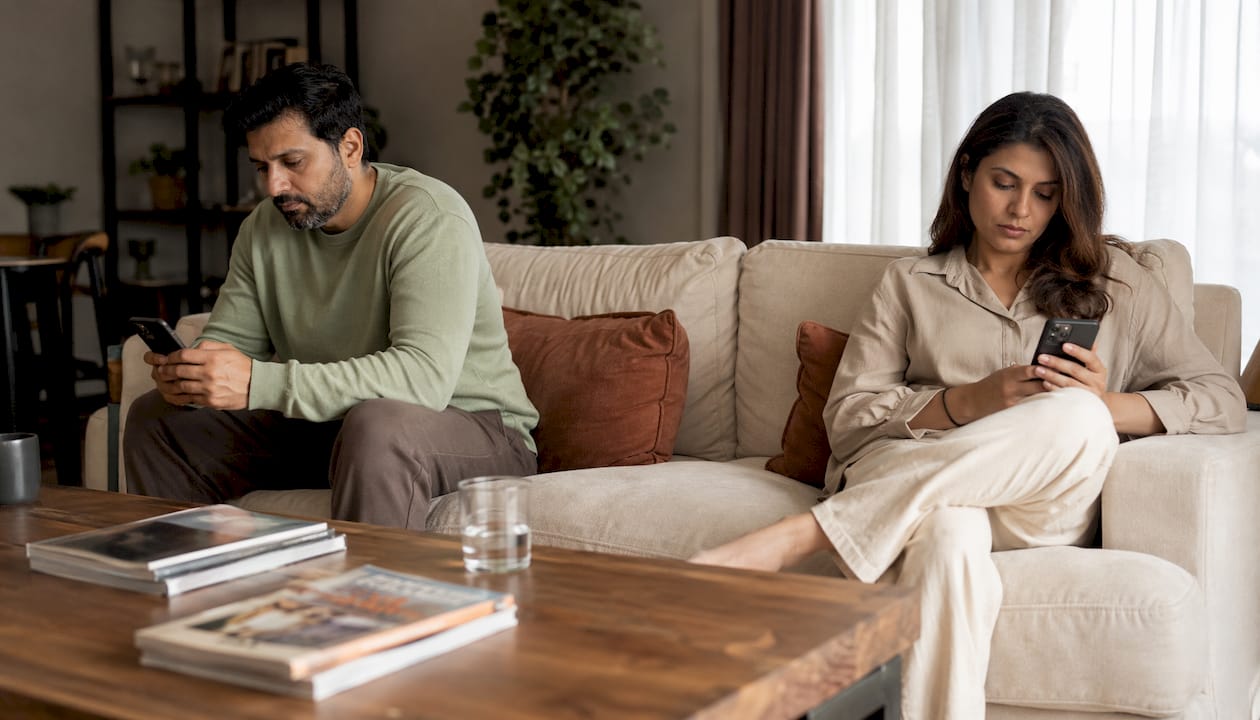
The numbers are striking. As of 2014, 25% of married couples and 42% of unmarried partners in serious relationships reported feeling distracted by their partner’s phone use when they were together.
There’s also a pattern worth naming: excessive texting, especially demands about location or constant check-ins, can signal insecurity rather than affection. On the more intimate end, frequent sexting correlates with more conflict, greater ambivalence about the relationship’s future, and lower long-term commitment compared to couples who sext occasionally or not at all.
Long-distance vs. close-proximity couples: who benefits from frequent texting?
The effect of texting frequency on satisfaction is not universal. It depends heavily on whether you and your partner live near each other.
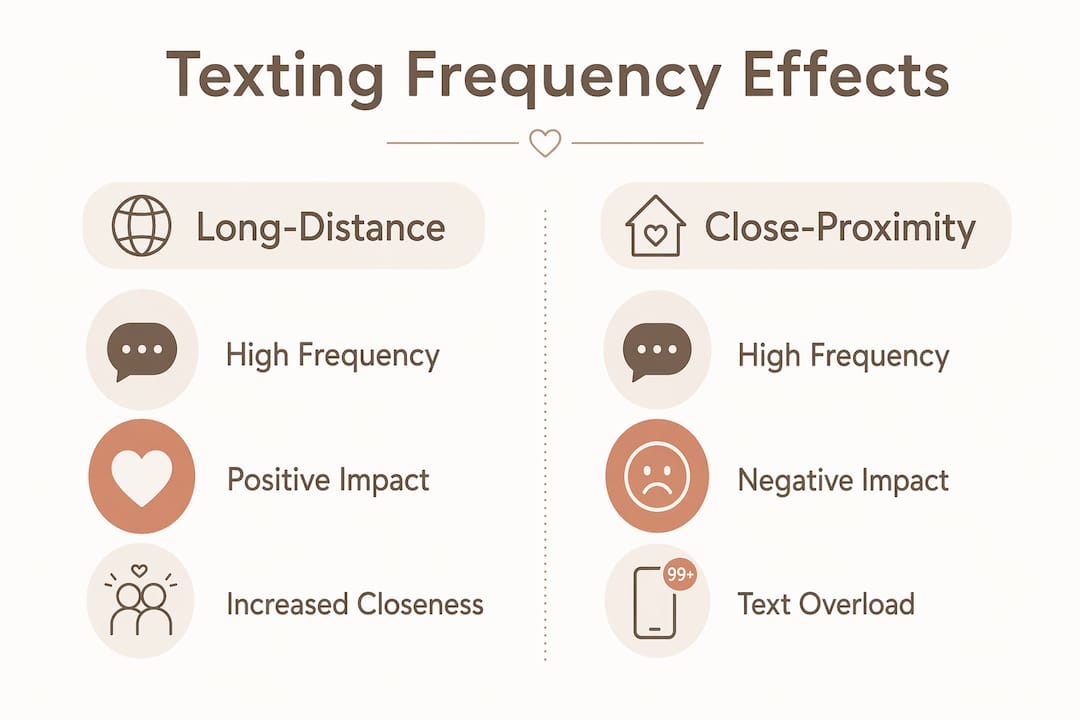
A study of 647 emerging adults found that texting frequency correlated with significantly greater relationship satisfaction in long-distance relationships (p=0.002), but showed no meaningful effect for geographically close couples (p=0.75). For couples who see each other regularly, voice calls were the stronger predictor of satisfaction. Texting’s relational value appears to be highest when it compensates for a lack of physical presence.
Key differences by relationship type:
- Long-distance couples use texting to maintain continuity, share daily details, and create a sense of virtual presence between visits.
- Geographically close couples tend to use texts for logistics, coordinating plans, and quick check-ins, which carry less emotional weight.
- Responsiveness during texting, not just frequency, also predicted satisfaction in long-distance relationships specifically.
- For couples who see each other daily, thoughtful digital communication matters more than message volume.
What relationship experts recommend for healthy messaging habits
The communication best practices that consistently appear in expert guidance share a common thread: treat texting as a bridge, not a destination. A few principles worth building into your routine:
- Match your partner’s natural pace rather than setting an arbitrary daily quota.
- Avoid using texts to sidestep hard conversations. Difficult topics deserve a real conversation, not a thread.
- Let morning messages and small check-ins serve as warmth, not surveillance.
- When you notice a texting imbalance, name it out loud rather than letting resentment build quietly.
Healthy messaging also means knowing when to put the phone down entirely. Face-to-face time where both partners are genuinely present builds the kind of intimacy that no text thread can replicate.
How Pingher helps couples find the right messaging rhythm
Pingher was built around one insight: the couples who feel most connected are not the ones texting constantly. They’re the ones whose messages land with intention. With its one-tap functionality, Pingher makes it easy to send a personalized, affectionate message without turning it into a production. You pick a tone, add your own touch, and it goes. No overthinking, no pressure.
For couples who want to stay emotionally close without flooding each other’s phones, Pingher fits naturally into a healthy rhythm. It’s particularly useful for partners who know they want to show up consistently but find that daily messaging sometimes slips when life gets busy. The app keeps that thread of warmth alive without requiring either partner to perform.
Pro Tip: Use Pingher to send one meaningful message at a natural moment in your day rather than a stream of quick texts. A single message that says something real tends to land better than ten that say nothing much.
You can explore thoughtful message ideas or go straight to Pingher to see how it works.
Why your brain responds to consistent messages, not just frequent ones
The psychological mechanism behind messaging and closeness comes down to perceived responsiveness, the sense that your partner understands you, values you, and is paying attention. Research on intimacy consistently identifies responsiveness as a core ingredient, and texting can either support or undermine it depending on how it’s used.
When messages arrive consistently and feel attuned to your emotional state, they reinforce a sense of security. Your nervous system reads that pattern as evidence that your partner is present even when they’re not physically there. Conversely, when texts feel obligatory, erratic, or one-sided, they can trigger the same anxiety as silence. The content matters, but so does the rhythm.
How attachment style shapes your texting preferences
Attachment style has a direct effect on how people use and interpret messaging frequency. People with anxious attachment tend to text more, check for replies more urgently, and read delays as signs of rejection. Those with avoidant attachment often prefer less frequent contact and can feel crowded by a high-volume texter.
The mismatch between an anxious and an avoidant texter is one of the most common sources of digital friction in relationships. The anxious partner sends more messages trying to close the gap; the avoidant partner pulls back further in response. Understanding your own attachment pattern, and your partner’s, reframes texting conflicts as something to work through together rather than a sign that one person cares more.
Cultural differences in what messaging frequency means
In the United States, frequent texting between partners is generally read as a sign of interest and investment, particularly early in a relationship. But that interpretation is not universal. In cultures with stronger norms around in-person communication or where digital messaging is newer, the same volume of texts might feel intrusive or even disrespectful of boundaries.
Even within the U.S., generational differences shape expectations. Younger adults often treat texting as a near-continuous ambient channel, while older partners may expect it to carry more deliberate weight. Neither approach is wrong, but when partners come from different cultural or generational backgrounds, those assumptions about messaging patterns need to be made explicit.
How messaging habits shift from early dating to long-term partnership
Early in a relationship, texting frequency tends to spike. Both partners are paying close attention to response times, initiation patterns, and tone. That hyper-awareness is normal. It’s also temporary.
As relationships mature, the texture of messaging changes more than the volume. Long-term couples often move toward shorter, more practical exchanges punctuated by occasional deeper ones. The emotional weight shifts from frequency to reliability. A partner who texts every day but says nothing meaningful can feel more distant than one who sends a single message that shows they were thinking about you. Couples who reconnect after emotional distance often find that rebuilding a consistent, low-pressure messaging rhythm is one of the first steps back toward closeness.
Key Takeaways
Messaging frequency shapes intimacy most powerfully through compatibility: couples with matched texting rhythms and mutual initiation report stronger satisfaction than those who simply text more.
| Point | Details |
|---|---|
| Compatibility beats volume | Perceived similarity in texting style and initiation predicts relationship satisfaction more than message count. |
| Phubbing harms closeness | As of 2014, 25% of married couples and 42% of unmarried partners in serious relationships reported feeling distracted by their partner’s phone use during shared time. |
| Long-distance benefit | Texting frequency correlates with satisfaction in long-distance relationships but not in geographically close ones. |
| Excessive texting signals insecurity | High-volume or demanding texting often reflects anxiety, not affection, and can feel controlling to the recipient. |
| Consistency over intensity | Secure couples can have low-messaging periods without losing closeness; a reliable rhythm matters more than daily volume. |
Recommended
Built for couples who care.
Pingher helps you send the right words at the right moment.
Get Pingher on Google Play