How Personalized Love Tools Work for Couples in 2026

How Personalized Love Tools Work for Couples in 2026
Personalized love tools are AI-powered platforms that collect intimate details about your relationship and transform them into custom messages, songs, letters, or keepsakes that express affection in ways a generic card never could. Understanding how personalized love tools work matters because the science behind them is more rigorous than most couples expect. These tools draw on clinical relationship frameworks, narrative architecture techniques, and pattern recognition to produce outputs that feel genuinely personal. Platforms like Pingher apply this same principle of specificity to daily communication, helping couples stay emotionally connected without requiring hours of effort.
How do personalized love tools work at their core?
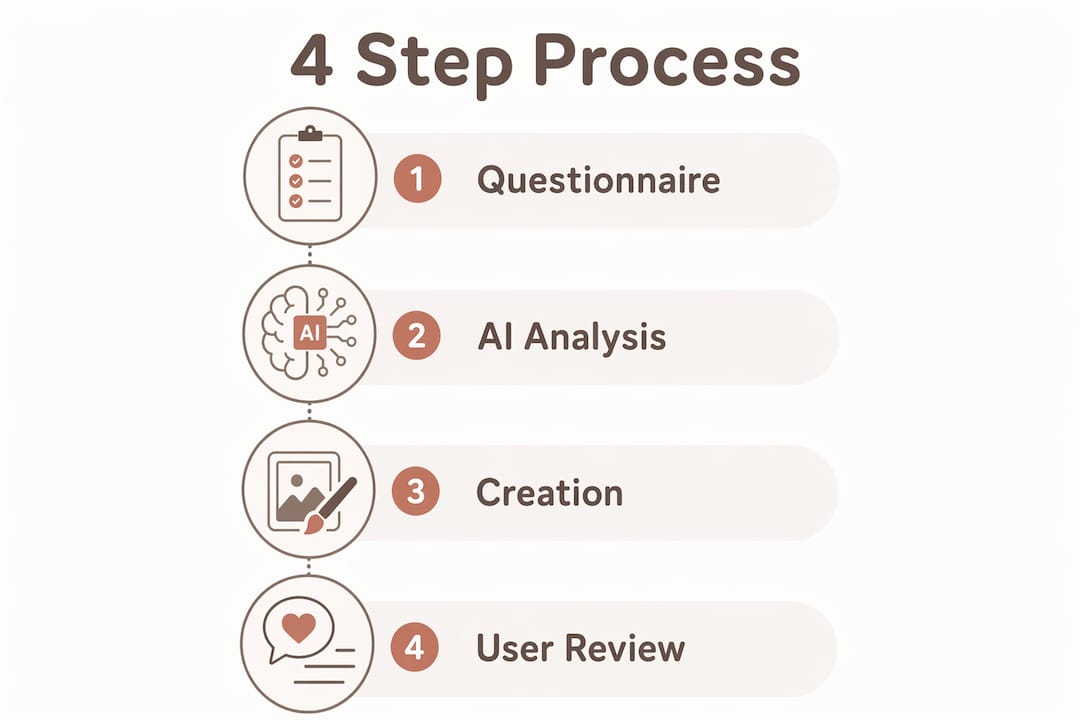
Personalized love tools follow a 4-step process: questionnaire, AI analysis, unique creation, and user review. Questionnaires typically take 2–3 minutes to complete, and delivery ranges from instant digital output to 24 hours for more complex formats. That speed matters because it removes the friction that stops most couples from expressing affection consistently.
The AI analysis step is where the real work happens. The system reads your inputs, identifies patterns in your relationship story, and selects the emotional tone, structure, and language that fits your specific dynamic. Generic templates skip this step entirely. That is why two people using the same tool can receive completely different outputs even when they describe similar feelings.

The final user review step gives couples control. You can edit, approve, or request changes before the output is delivered. This keeps the human voice intact and prevents the result from feeling like it was written by a machine.
What data do personalized love tools collect and why does it matter?
The quality of your inputs determines the quality of your output. Specific memorable details like inside jokes, shared memories, and precise emotional moments produce far more authentic results than vague statements like “we love spending time together.” The difference between “we met at a rainy farmers market in october” and “we fell in love” is the difference between a letter that makes someone cry and one they forget by tuesday.
Typical questionnaires ask for:
- First meeting details: where, when, and what made it memorable
- Shared experiences: trips, milestones, and recurring rituals
- Inside language: nicknames, phrases, or references only you two understand
- Emotional turning points: moments of vulnerability, growth, or commitment
- Future intentions: what you want your partner to feel or remember
Privacy is a real concern when you are sharing intimate relationship data. High-quality tools process and delete raw inputs after generating insights rather than storing them indefinitely. This practice separates trustworthy platforms from data-harvesting apps that treat your relationship details as a product. Before using any tool, check its privacy policy for explicit language about data deletion.
Pro Tip: Write your questionnaire answers in full sentences, not bullet points. The AI reads for emotional context, and complete sentences carry more signal than fragmented notes.
How do AI and relationship science shape personalized love expressions?
The most effective personalized love tools are not built on general-purpose chatbots. Clinical AI tools leverage data from over 36,000 couples using Emotionally Focused Therapy frameworks to generate relational insights in about 5 minutes. EFT is an attachment-based clinical model with strong trial outcomes. When AI is trained on EFT principles, it can recognize patterns in how couples communicate, not just what they say.
Here is how the AI creation process typically works in clinically grounded tools:
- Input parsing: The AI reads questionnaire responses and tags emotional themes, relationship stages, and communication styles.
- Pattern recognition: It identifies relational dynamics, such as pursue-withdraw cycles or shared humor patterns, that shape the tone of the output.
- Narrative structuring: The AI applies narrative architecture techniques using verses, choruses, and bridges to build an emotional arc from your raw inputs.
- Language generation: It selects vocabulary and phrasing that matches the emotional register of your relationship, not a default romantic template.
- Review and refinement: The draft is surfaced for your approval, with editing options to adjust tone, length, or specific details.
“The key to effective personalized love tools is their grounding in attachment science and clinically validated patterns, not just chatbot-like AI.”
AI tools also identify negative relational cycles like pursue-withdraw dynamics quickly and with high consistency. This capability means the tool is not just writing pretty words. It is recognizing the emotional architecture of your relationship and building outputs that speak directly to it. That is a fundamentally different process from filling in a template with your partner’s name.
What types of personalized love tools exist and how do their workflows differ?
The format you choose shapes both the experience and the timeline. Digital tools deliver fast. Physical keepsakes take longer but carry a different emotional weight.
| Format | Delivery time | User involvement | Best for |
|---|---|---|---|
| AI-generated love letter | Instant to 1 hour | Questionnaire, review, edit | Anniversaries, apologies, daily affection |
| Personalized song | 1–24 hours | Questionnaire, style selection, review | Birthdays, proposals, milestone gifts |
| Interactive quiz or playlist | Instant | Short input form | Casual connection, shared fun |
| Hardcover illustrated book | As short as 5 days | Extended questionnaire, illustration review | Major milestones, lasting keepsakes |
| Animated digital letter | Instant to a few hours | Questionnaire, animation style choice | Long-distance relationships, surprises |
Interactive elements like quizzes, playlists, and animated letters add engagement beyond a static document. These formats work especially well for couples who want a shared experience rather than a one-way gift. A quiz about your relationship history, for example, creates a conversation rather than just a moment of reading.
Pro Tip: If you are choosing between a digital and physical format, consider the occasion. Digital tools work best for spontaneous or frequent expressions. Physical keepsakes carry more weight for once-in-a-year milestones.
How do personalized love tools enhance emotional connection?
Personalized love tools work on emotional connection by doing something most couples struggle to do on their own: they reflect the relationship back to both partners in a structured, articulate way. Written affection messages give couples a concrete record of how they feel about each other, which reinforces the bond over time. Reading your own story told back to you with care is a powerful experience.
The specific benefits include:
- Validation of shared history: Seeing your inside jokes and memories woven into a letter or song confirms that your relationship is unique and worth celebrating.
- Facilitation of hard conversations: A personalized letter can open emotional doors that direct conversation sometimes cannot. Couples report that receiving a thoughtful written expression makes them feel safe enough to reciprocate verbally.
- Consistent appreciation: Tools that support daily or weekly expressions, like Pingher’s one-tap messaging, prevent the emotional drift that happens when couples go long stretches without verbal affirmation.
- Emotional responsiveness: Personalized outputs model the kind of specific, attentive language that builds emotional connection in relationships, which couples can then carry into their everyday communication.
The distinction between a generic “I love you” and a message that references the specific Tuesday you stayed up until 2 a.m. talking about your fears is not trivial. Specificity signals attention. Attention signals care. And care is the foundation of lasting emotional connection. Communication tools that prioritize this kind of specificity are the ones that actually strengthen relationships over time.
Key takeaways
Personalized love tools work because they combine clinical relationship science, AI pattern recognition, and narrative structure to turn your specific memories and feelings into emotionally resonant expressions.
| Point | Details |
|---|---|
| Input quality drives output quality | Specific details like inside jokes and shared memories produce far more authentic results than generic statements. |
| Clinical frameworks matter | Tools grounded in EFT and attachment science produce outputs that reflect real relationship dynamics, not templates. |
| Format shapes the experience | Digital tools deliver fast for daily use; physical keepsakes carry more weight for major milestones. |
| Privacy requires active verification | High-quality tools delete raw relationship data after processing. Check the privacy policy before sharing intimate details. |
| Consistency builds connection | Daily or frequent personalized expressions, supported by tools like Pingher, prevent emotional drift between partners. |
Why I think most couples underestimate what these tools actually do
Most people assume personalized love tools are just fancy autocomplete. You type in a few details, the AI swaps them into a template, and out comes something that sounds vaguely romantic. That assumption is wrong, and it leads couples to either dismiss these tools entirely or use them poorly.
The tools that actually work are built on something much more specific. When a system is trained on tens of thousands of real couple interactions using EFT principles, it is not guessing at what sounds romantic. It is recognizing the emotional architecture of your relationship and building language that fits it. That is a meaningful distinction.
What I have found is that the biggest mistake couples make is treating the questionnaire as a formality. They rush through it with short answers and then wonder why the output feels flat. The questionnaire is the entire foundation. The more honest and specific you are, the more the output sounds like it was written by someone who actually knows you.
The privacy question is also underweighted. Couples share genuinely intimate details in these questionnaires. Knowing whether that data is deleted or stored is not a minor technical footnote. It is a basic condition of trust. I would not use any tool that does not explicitly state it deletes raw inputs after processing.
The future of these tools is not more automation. It is better input design. The platforms that figure out how to help couples articulate their relationship story more clearly will produce outputs that feel less like AI and more like memory.
— Alan
Pingher makes personalized daily connection simple
Applying the science of personalized communication does not have to mean commissioning a custom song for every occasion. The most consistent relationship benefit comes from frequent, specific expressions of affection, not just milestone gestures.
Pingher is built for exactly that. The platform lets couples craft and send personalized messages to their partners with one tap, combining the specificity that makes expressions feel real with the convenience that makes them actually happen. The clinical insight is clear: consistent verbal appreciation builds emotional connection more reliably than infrequent grand gestures. Pingher puts that principle into daily practice, so the people you care about feel valued on an ordinary Tuesday, not just on anniversaries.
FAQ
What are personalized love tools?
Personalized love tools are AI-powered platforms that collect specific details about your relationship and generate custom letters, songs, books, or messages tailored to your unique story. They differ from generic templates by using clinical frameworks and narrative techniques to produce emotionally resonant outputs.
How long does it take to get a personalized love tool output?
Digital formats like AI-generated letters and playlists deliver in minutes to a few hours. Physical keepsakes like hardcover illustrated books typically arrive in as little as 5 days, depending on the platform.
Do personalized love tools store my private relationship data?
High-quality tools process your inputs to generate the output and then delete the raw data. Always check the platform’s privacy policy for explicit language about data deletion before sharing intimate details.
How do these tools use AI differently from a basic chatbot?
The most effective tools are trained on clinical datasets using Emotionally Focused Therapy frameworks, which allows them to recognize specific relationship dynamics rather than producing generic romantic language. That clinical grounding is what separates a meaningful output from a template with your name in it.
Can personalized love tools actually improve a relationship?
Consistent, specific expressions of affection are linked to stronger emotional bonds in couples. Tools that support daily or frequent personalized communication, like Pingher, help couples maintain the verbal appreciation that prevents emotional drift over time.
Recommended
Built for couples who care.
Pingher helps you send the right words at the right moment.
Get Pingher on Google Play