Types of Partner Appreciation Gestures That Truly Land
Types of Partner Appreciation Gestures That Truly Land
Partner appreciation gestures are intentional acts and expressions that show gratitude, love, and value toward your partner in ways that genuinely resonate with them. The types of partner appreciation gestures that work best align directly with your partner’s primary love language, a framework developed by relationship researchers and popularized by experts like The Gottman Institute. Tailoring appreciation to what your partner values most creates deeper emotional connection than any generic romantic gesture ever could. This article covers the five main categories, gives you specific examples within each, and helps you match gestures to your partner’s preferences.
1. What are the types of partner appreciation gestures?
The five primary love languages define the core types of partner appreciation gestures: words of affirmation, acts of service, receiving gifts, quality time, and physical touch. Gestures aligned with love languages are significantly more impactful and avoid the misunderstandings that come from expressing love in a way your partner does not naturally receive. Think of each category as a different dialect. You may be fluent in one, but your partner may speak another entirely. Knowing the difference changes everything.

The Gottman Institute identifies a 5:1 positive-to-negative interaction ratio as the recommended threshold for healthy, stable relationships. Appreciation gestures are one of the most direct ways to build that ratio. Every sincere expression of gratitude counts as a deposit in your relationship’s emotional account.
2. How do words of affirmation serve as partner appreciation gestures?
Words of affirmation are spoken or written messages that express gratitude for specific actions or admiration for specific character traits. Vague praise feels hollow. Specific appreciation statements are perceived as genuine and meaningful. Saying “you are awesome” lands differently than “you handled that stressful situation with so much patience, and it made me feel safe.”
Dr. Roven Magidin’s appreciation formula gives you a reliable structure: “I appreciate you for [action]”, then name the character trait you see, then describe the emotional impact on you. For example: “I appreciate you for making dinner when I was exhausted. I see how much you care about us, and it makes me feel truly loved.” That three-part structure creates emotional depth that a simple “thank you” cannot match.
Practical examples of words of affirmation include:
- Handwritten notes left on the bathroom mirror or in a coat pocket
- Daily verbal acknowledgments during ordinary moments, not just milestones
- Text messages sent mid-day with no agenda other than to say you are thinking of them
- Public praise in front of friends or family, which amplifies the emotional impact
Pro Tip: Use the appreciation formula at least once a week. Many couples find it feels awkward at first, but consistent use creates emotional safety and deepens intimacy over time.
3. What acts of service can effectively convey partner appreciation?
Acts of service are tangible, helpful actions that ease your partner’s daily load. They communicate “I see what you carry, and I want to help.” The emotional message is care and attentiveness, not just task completion. This makes acts of service one of the most grounded and practical gesture of love ideas available to any couple.
Examples that consistently land well include:
- Doing a chore your partner normally handles, without being asked
- Running an errand they have been putting off
- Preparing a meal on a night they are visibly drained
- Handling a logistical task, like booking an appointment or organizing paperwork, that they have mentioned
Real-time appreciation supports connection better than delayed gratitude. Acting in the moment, when you notice your partner is stretched thin, carries more weight than a grand gesture planned weeks later.
Pro Tip: Watch what tasks your partner mentions with a sigh or keeps postponing. Those are the acts of service that will mean the most.
4. How does gift-giving function as a partner appreciation gesture?
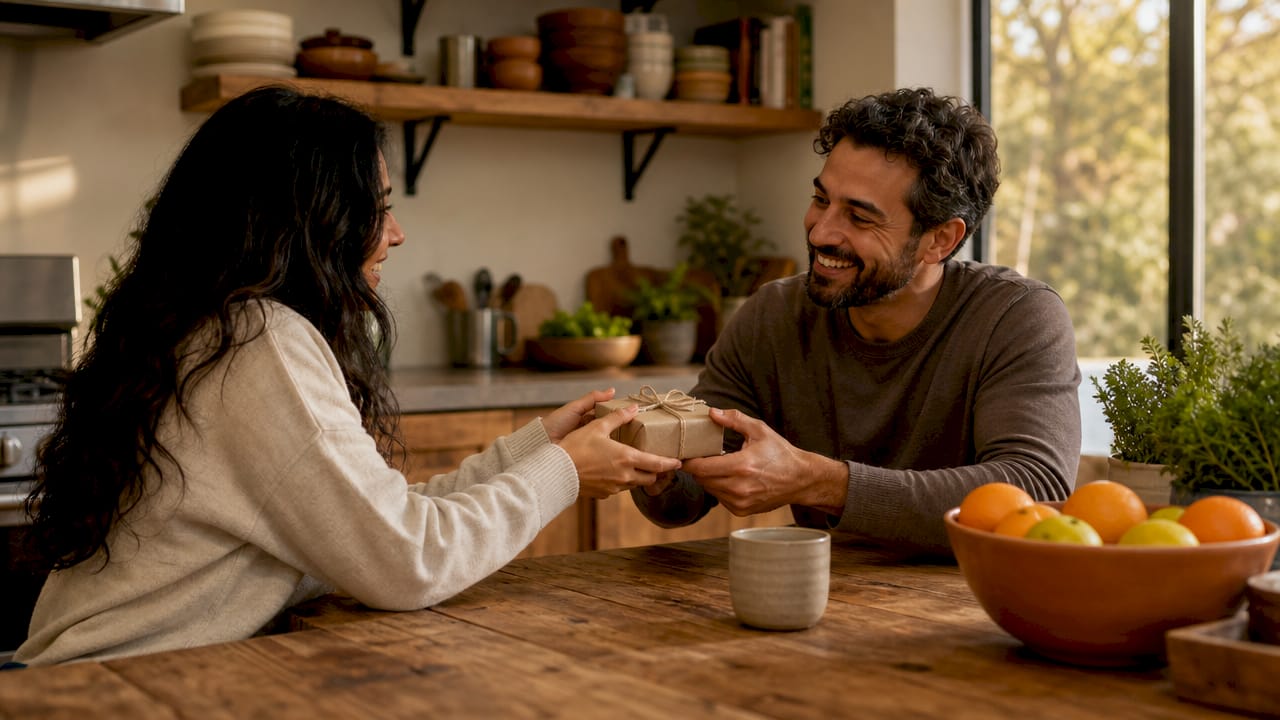
Gifts symbolize thoughtfulness and attention to your partner’s preferences. The value is not in the price tag. It is in the signal that you were thinking of them when they were not around. That is the emotional core of this love language, and it is what separates a meaningful gift from a forgettable one.
Thoughtful partner gift ideas that communicate genuine appreciation include:
- A handwritten note paired with their favorite snack or coffee order
- A personalized keepsake tied to a shared memory, like a photo book or custom print
- Surprise tickets to an experience they have mentioned wanting to try
- A small, specific item that references an inside joke or a conversation from months ago
Pairing a gift with words of affirmation multiplies the effect. A gift alone says “I thought of you.” A gift with a specific, heartfelt note says “I know you, and I value what makes you unique.” Appreciation gestures make partners feel treasured and remembered, which is the deeper need this love language addresses.
5. In what ways does quality time communicate appreciation?
Quality time is undistracted, fully present attention given to your partner. Phones down, notifications off, and genuine engagement with what they are saying and feeling. This type of romantic appreciation gesture communicates that your partner is worth your most limited resource: focused attention.
Examples of quality time that build real connection include:
- Scheduled date nights with a clear plan, not just “we should hang out”
- Shared hobbies or activities you both genuinely enjoy
- Attentive conversations where you ask follow-up questions and reflect back what you hear
- Short, daily check-ins that create emotional continuity between bigger moments
Pro Tip: Active listening is the skill that makes quality time actually work. Ask one open-ended question and then stay quiet long enough to hear the full answer. That pause alone signals deep respect.
Small, real-time acknowledgments matter more than waiting for formal occasions. A 10-minute conversation where your partner feels fully heard does more for your bond than a weekend trip where you are both distracted.
6. Why is physical touch a powerful partner appreciation gesture?
Physical touch releases bonding hormones like oxytocin, reinforcing emotional connection and creating a felt sense of safety between partners. Touch promotes intimacy and emotional closeness in ways that words alone cannot replicate. For partners whose primary love language is physical touch, a hug after a hard day communicates more than a paragraph of praise.
Forms of physical touch that express appreciation include:
- A long hug when your partner arrives home, held for at least a few seconds
- Handholding during ordinary activities like walking or watching a movie
- A gentle hand on the shoulder or back during a stressful moment
- Kisses that are not transactional, offered simply as a sign of affection
Reading your partner’s cues matters here. Touch should feel like a gift, not a demand. When combined with words of affirmation or acts of service, physical touch amplifies the emotional message of all three gestures at once.
7. How to choose the best partner appreciation gestures for your relationship
The most effective approach is to identify your partner’s primary love language first, then build your appreciation practice around it. Observing your partner’s reactions is the fastest method. Notice what they complain about not getting enough of, what they do for others most naturally, and what makes them light up when you do it.
| Love language | Linked gestures | Typical partner response |
|---|---|---|
| Words of affirmation | Specific verbal praise, notes, texts | Feels seen, emotionally validated |
| Acts of service | Chores, errands, practical help | Feels cared for and supported |
| Receiving gifts | Thoughtful items, personalized keepsakes | Feels remembered and treasured |
| Quality time | Date nights, attentive conversations | Feels prioritized and connected |
| Physical touch | Hugs, handholding, comforting touch | Feels safe and emotionally close |
Mixing gesture types works well, but leading with your partner’s primary language prevents the mismatch that leaves both partners feeling unappreciated despite genuine effort. Direct communication is also valid. Asking your partner “what would make you feel most appreciated this week?” removes guesswork entirely.
Keeping a positives log helps you notice and express appreciation more authentically and frequently. Tracking what your partner does well each day combats negativity bias and supports the 5:1 ratio that relationship research identifies as the threshold for stability.
Pro Tip: Start a simple notes app list titled “things I appreciate about [partner’s name].” Add one entry per day for two weeks. You will be surprised how much it shifts your own perspective, even before you say a word.
Key takeaways
The most effective partner appreciation gestures are specific, timely, and aligned with your partner’s primary love language rather than your own default style.
| Point | Details |
|---|---|
| Match gestures to love language | Appreciation lands harder when it speaks your partner’s primary love language. |
| Use the appreciation formula | Structure praise as action, trait, and emotional impact for maximum sincerity. |
| Small and real-time beats grand and delayed | Frequent small gestures build more connection than rare big ones. |
| Mix gesture types strategically | Lead with your partner’s primary language, then layer in others for depth. |
| Track positives daily | A positives log combats negativity bias and supports the 5:1 ratio. |
What I have learned about appreciation that most articles skip
Most relationship advice treats appreciation like a task to complete. Write a note. Say thank you. Check the box. That framing misses the point entirely.
The couples I have seen grow closest are the ones who treat appreciation as a lens, not a to-do list. They are genuinely curious about their partner. They notice things. They say something when they notice. That curiosity is what gratitude reintroduces into relationships, interrupting the slow drift into taking each other for granted.
The hardest part is not knowing what to say. It is the vulnerability of saying it. Telling your partner “I see how hard you work for us, and it moves me” requires you to be open. That openness is exactly what creates the emotional safety both partners are usually craving.
Expressing appreciation frequently also shifts the internal perspective of the person giving it. You start to see your partner differently. Resentment softens before a single word is spoken. That is the part nobody talks about, and it is the most powerful reason to start today.
— Alan
How Pingher helps you build a daily appreciation habit
Knowing the right gestures is one thing. Remembering to use them when life gets busy is another challenge entirely.
Pingher is a messaging app built specifically for couples who want to express appreciation daily without it feeling like a chore. With one-tap functionality, you can send personalized, heartfelt messages to your partner at any time, whether that is a quick words-of-affirmation text mid-afternoon or a scheduled reminder that arrives exactly when your partner needs it most. Pingher connects the appreciation gestures covered in this article directly to your daily routine, so the emotional deposits keep building even on your busiest days.
FAQ
What are the main types of partner appreciation gestures?
The five main types are words of affirmation, acts of service, receiving gifts, quality time, and physical touch. These categories come from the five primary love languages framework and cover the full range of ways partners express and receive appreciation.
How do I know which appreciation gesture my partner prefers?
Observe what your partner complains about not getting enough of and what they do most naturally for others. Those patterns usually reveal their primary love language. Asking them directly is also a reliable and respectful approach.
Why do specific appreciation statements work better than general ones?
Vague praise like “you are great” feels hollow because it could apply to anyone. Specific statements that name an action, a character trait, and an emotional impact feel genuine because they prove you were actually paying attention.
How often should I express appreciation to my partner?
Relationship research from The Gottman Institute points to a 5:1 positive-to-negative interaction ratio as the threshold for relationship stability. Daily small gestures, rather than occasional grand ones, are the most effective way to maintain that balance.
Can appreciation gestures improve a struggling relationship?
Appreciation gestures build emotional safety and reduce defensiveness over time. They are not a substitute for addressing deeper issues, but they create the positive foundation that makes difficult conversations easier and more productive.
Recommended
Built for couples who care.
Pingher helps you send the right words at the right moment.
Get Pingher on Google Play