Why Love Notes Improve Relationships: A Couples Guide

Why Love Notes Improve Relationships: A Couples Guide
Love notes improve relationships by creating specific, repeated expressions of appreciation that build emotional intimacy over time. Relationship researchers call this process “gratitude operationalization,” the act of turning a felt emotion into a concrete, receivable message. Sara Algoe’s find-remind-bind model and the Gottman Institute’s Sound Relationship House both confirm that written appreciation works through distinct psychological mechanisms, not just sentiment. The benefits of love notes extend well beyond a warm feeling. They shift how couples perceive each other daily, reduce contempt, and function as small but powerful deposits into what the Gottman Institute calls the emotional bank account.
Why love notes improve relationships at a psychological level
Love notes work because they do three specific things at once. They help you find value in your partner, remind you of that value regularly, and bind you together through shared positive experience. Sara Algoe’s find-remind-bind model shows that gratitude expressions sustain ongoing connection and constructive relating, particularly when the recipient feels genuinely seen. That last part matters more than most couples realize.
Gratitude expressed in a note triggers positive emotions in the writer and the reader. Those emotions motivate both partners to invest more in the relationship. The cycle reinforces itself. A note written on a Tuesday morning can shift the emotional tone of an entire week.
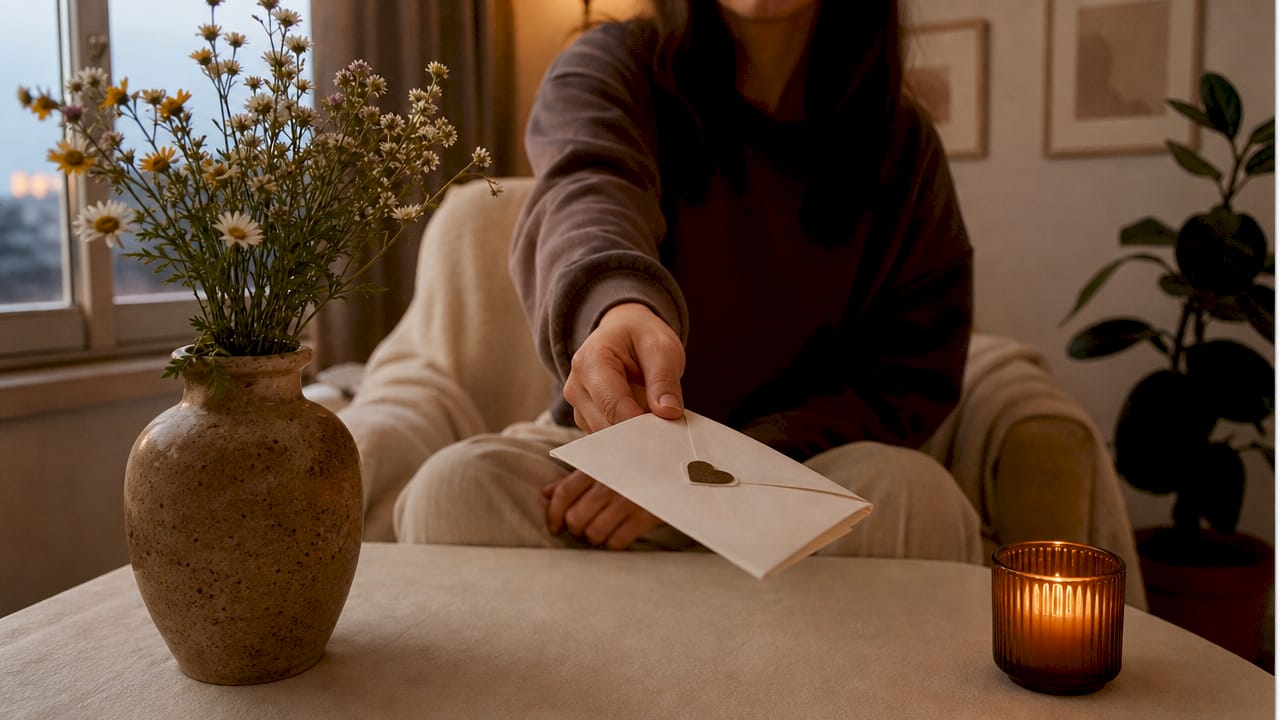
Partner responsiveness is the key variable here. A note that feels generic or poorly timed can fall flat. A note that names something specific, delivered at the right moment, lands with real force. Emotional connection between partners deepens when gratitude is both expressed and received as meaningful.
Love notes also support emotion regulation. Writing one requires you to pause and scan for what is good in your relationship. That act of positive scanning competes directly with the negative thought patterns that erode closeness over time. The note becomes evidence of what you value, not just a gesture.
- Be specific. Name the exact behavior or quality you appreciate, not a general trait.
- Be timely. Write the note close to the moment that inspired it.
- Be personal. Reference something only you two would recognize.
- Invite a response. A note that opens a conversation deepens connection more than one that closes it.
Pro Tip: Write the note within 24 hours of the moment that moved you. Specificity fades fast, and a note written from fresh memory carries far more weight than one written from a vague impression.
How fondness and admiration frameworks connect to written appreciation
The Gottman Institute’s Sound Relationship House places fondness and admiration at the foundation of a healthy relationship. Without them, contempt grows. Contempt is the single strongest predictor of relationship breakdown, and specific appreciation statements are its direct antidote.
Gottman recommends at least three appreciation statements per week to build and maintain this foundation. Love notes are one of the most natural ways to deliver those statements. They give you space to be thoughtful, which verbal appreciation in the moment sometimes does not.
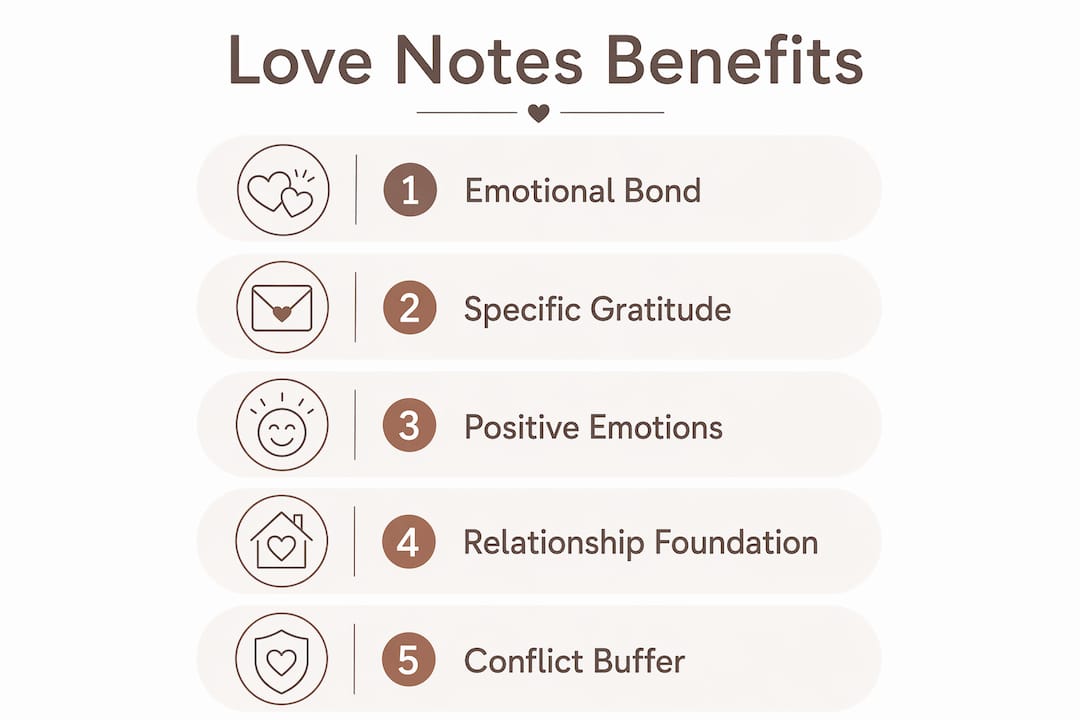
Generic compliments do not build fondness the way specific ones do. “You’re amazing” registers differently than “The way you handled that call with your mom yesterday showed real patience. I noticed, and I admire you for it.” The second note targets character and a concrete incident. That is the Gottman model in practice.
Here is how to structure a love note that builds genuine fondness:
- Name the specific behavior. Describe exactly what your partner did or said.
- Connect it to character. Explain what that behavior reveals about who they are.
- State your emotional response. Tell them how it made you feel, not just what you observed.
- Anchor it in your shared story. Reference why this quality matters to you specifically.
- Keep it short. Three to five sentences outperform a paragraph of praise every time.
Love notes also function as what the Gottman Institute calls emotional bank account deposits. Couples who consistently respond to each other’s bids for connection 86% of the time report higher relationship satisfaction. A love note is a bid. Writing one regularly keeps the account funded.
Pro Tip: Keep a few past love notes somewhere visible, like a desk drawer or phone photo album. During conflict, reading one can interrupt a negative spiral and reconnect you to your partner’s better qualities before the conversation escalates.
Do love notes align with how your partner receives love?
The Five Love Languages framework, developed by Gary Chapman, identifies words of affirmation as one of five primary ways people feel loved. Love notes are the written form of that language. For partners whose primary language is words of affirmation, a handwritten or digital note carries more weight than a gift or a favor.
Kind words and messages help partners feel loved and noticed. That effect is strongest when the message is concrete rather than abstract. “I love you” is a declaration. “I love the way you make coffee for me before I even ask” is an affirmation. The second one shows attention, and attention signals care.
Research on partner responsiveness suggests that the specific love language matters less than whether your partner feels genuinely understood and valued. A well-written note achieves both. It shows you paid attention, and it gives your partner something tangible to hold onto.
Love notes also build emotional intelligence between partners. Writing one requires you to identify your own feelings and articulate them clearly. Reading one requires your partner to receive care without deflecting it. Both skills strengthen communication in relationships over time.
- Use “I” statements. “I felt proud watching you” lands better than “You were great.”
- Avoid backhanded notes. “You’re finally getting better at listening” is not appreciation.
- Match the medium to the moment. A handwritten note for a milestone. A digital message for a Tuesday afternoon check-in.
- Read your partner’s response. If they seem unmoved, ask what kind of appreciation feels most real to them.
Best practices for writing love notes that actually work
The most common mistake couples make with love notes is treating them as a one-way gesture. A note that invites no response functions more like a monologue than a connection. Specificity and reciprocity in love notes increase perceived responsiveness and amplify the relational benefits of gratitude.
Reciprocity does not mean your partner must write one back immediately. It means the note opens a door. Ending with a question or a soft invitation, like “Tell me what you’ve been thinking about lately,” turns a note into a conversation starter.
Timing and medium both affect how a note lands. A long, heartfelt message sent during a stressful workday may go unread or feel like pressure. A short, warm note sent on a relaxed evening gets the full attention it deserves. Short love messages can carry significant emotional weight when the timing is right.
One critical boundary: love notes should not replace difficult conversations. Using a note to smooth over unresolved conflict without addressing it is a withdrawal disguised as a deposit. Notes work best as support during connection, not as a way to sidestep tension.
- Write during calm, not crisis. Notes written from a place of genuine warmth land better than notes written to repair damage.
- Vary your focus. Alternate between appreciating actions, character traits, and shared memories.
- Set a rhythm. Weekly notes build more trust than occasional bursts of affection followed by long silences.
- Keep a note archive. Saved notes become a record of your relationship’s positive history.
Pro Tip: If you struggle to start, use this structure: “I noticed [specific behavior]. It made me feel [emotion]. It reminded me why I [specific reason you love them].” Three sentences. That is enough.
Key Takeaways
Love notes strengthen relationships by turning gratitude into a consistent, specific practice that builds emotional intimacy and funds the emotional bank account over time.
| Point | Details |
|---|---|
| Specificity drives impact | Name exact behaviors and character traits, not general praise, to make notes land with real force. |
| Emotional bank account | Regular love notes act as small deposits that build relationship satisfaction and resilience. |
| Fondness blocks contempt | Three specific appreciation statements per week, as Gottman recommends, reduce contempt and build admiration. |
| Responsiveness matters | Notes work best when timed well and personalized; generic or poorly timed notes lose their effect. |
| Notes support, not replace | Love notes build connection during calm moments. They should never substitute for honest, direct conversation. |
What I’ve learned from watching couples use love notes consistently
Most couples I’ve observed start writing love notes with good intentions and then stop within two weeks. The reason is almost always the same: they treat it as a grand gesture rather than a small, repeatable habit. Grand gestures are exhausting. Small habits compound.
The couples who benefit most are not the ones writing the most eloquent notes. They are the ones writing the most consistent ones. A three-sentence note every Sunday morning does more for a relationship than a beautifully crafted letter sent once a year. Consistency signals that your partner is on your mind, not just on special occasions.
I’ve also seen love notes misused. A partner who writes a note after every argument, instead of working through the conflict, is using appreciation as avoidance. The note feels good in the moment but builds resentment over time because the real issue never gets addressed. Appreciation and accountability are not substitutes for each other.
The most surprising thing I’ve noticed is how writing love notes changes the writer more than the reader. When you commit to scanning for what is good in your partner, you start finding more of it. That shift in attention is not trivial. It is the difference between a relationship that feels like a burden and one that feels like a choice you keep making.
Start small. Pick one specific thing your partner did this week that you genuinely appreciated. Write it down. Send it. See what happens.
— Alan
Putting love notes into practice with Pingher
Writing love notes consistently is simple in theory and easy to forget in practice. Life moves fast, and the intention to express appreciation often gets buried under everything else.
Pingher is built for exactly this gap. With one tap, you can craft and send a personalized message to your partner without interrupting your day. Pingher sends regular reminders so the habit stays alive, and every message is designed to feel personal rather than automated. For couples who want to build the kind of daily appreciation practice that relationship research consistently supports, Pingher makes it easy to start and easier to keep going. The emotional bank account does not fill itself.
FAQ
Why do love notes improve relationships more than verbal praise?
Written notes give your partner something tangible to return to, which reinforces the positive emotion over time. Verbal praise fades from memory; a note stays.
How often should couples write love notes?
The Gottman Institute recommends at least three specific appreciation statements per week. A short note two to three times a week builds a consistent emotional deposit habit.
What makes a love note effective?
Effective love notes name a specific behavior, connect it to your partner’s character, and state your emotional response. Generic compliments are far less impactful than concrete, personal observations.
Can love notes fix a struggling relationship?
Love notes build positive emotional capital, but they do not resolve unaddressed conflict. They work best as a maintenance practice in relationships where both partners are also willing to have honest conversations.
What is the find-remind-bind model?
Sara Algoe’s find-remind-bind model describes how gratitude expressions help partners find value in each other, stay reminded of that value, and feel bound together through shared positive experience.
Recommended
Built for couples who care.
Pingher helps you send the right words at the right moment.
Get Pingher on Google Play